

The economist Roland Fryer recently wrote an interesting and longer-than-typical op-ed about the cost of living. The frame is that Americans, even median Americans, are richer than ever in terms of overall income - and not by a trivial amount, either. He outlines an over 50% jump in inflation-adjusted median household income since 1975. “But everything costs more!” - of course, that is the point of the inflation adjustment.
But Fryer also says two other things that are the brunt of his argument: one, a lot of that extra income is eaten up by “Baumol goods” - that is, services that are hard to provide at any kind of labor scale, and so don’t tend to see what we see with, say, computers, where we are awash in them for cheap. Overall inflation measures don’t capture those, plus (as he notes) a considerable amount of the higher household income is because a much higher percentage of households have two workers, thus necessitating extra costs (like daycare, a “Baumol good” for sure). So the household in 1975 may truly have had more disposable, discretionary income at the end of the day, and discretionary income is what makes us feel not squeezed. He admits there are real challenges in certain areas of life, that are not “indulgence” but “infrastructure” for an ordinary middle-class household today. The maze of medical costs is highlighted.
But two, Fryer says, life is still a lot better than in 1975. He outlines higher life expectancy, cleaner air, safer cars, and unimaginable more media choices. Yet we fail to notice those gains (that, he says, the economy has provided) because of “hedonic adaptation.” Thus, he recommends the following:
The antidote [to hedonic adaptation] psychologists prescribe is mental subtraction: deliberately imagining life without what you take for granted. Try it with 1975. No air bags. A much higher risk of being robbed. Three television networks. We’ve adapted to these gains so completely they no longer feel like gains. The greatest threat to middle-class happiness may not be the cost of child care. It may be that they can’t afford to notice how much better life has become.
It’s a rather strange conclusion, but a fairly common one among market apologists: we complain, but in fact, we have it better than ever. There are at least two problems with this. One is the weird aspects of using “median household” measures. This sort of aggregated data is the best we can do, perhaps, but it’s important to recognize that there is no “median household” in reality. The actual median household by income may have quite different expenses. Perhaps they live in Wichita. Maybe they share in a vacation home in Michigan that the family has passed down. Maybe they have large, ongoing child care expenses because of a special-needs child. Maybe they live in a voucher state, and so send their kids to private school for very little. Or maybe they are 60-year-olds with two adult kids and no mortgage. Measuring things based on overall medians tends to aggregate things that give us an illusion of a particular case, but in fact, there is no such case. Still, it’s what we have, and Fryer nicely shows that some aspects of the problem need specific targeting, like medical care.
But the more interesting and problematic element involves the supposed quality-of-life gains he outlines. Weirdly, he attributes many of these gains to the economy, but it’s plainly the case that things like cleaner air, safer cars, and lower crime have little to do with economic forces - they are the result of specific government actions, like regulating industry, getting lead out of gasoline, and policing better (there are other, more troubling aspects of lower crime, of course). The clearest way the economy has increased the quality of life is that we no longer have just three television networks and no longer, as he puts it, have to wait “for the evening news to learn what was happening in the world.” He cites a study that claims “Americans value access to search engines, email and digital maps at roughly $30,000 a year, none of which shows up in income statistics.”
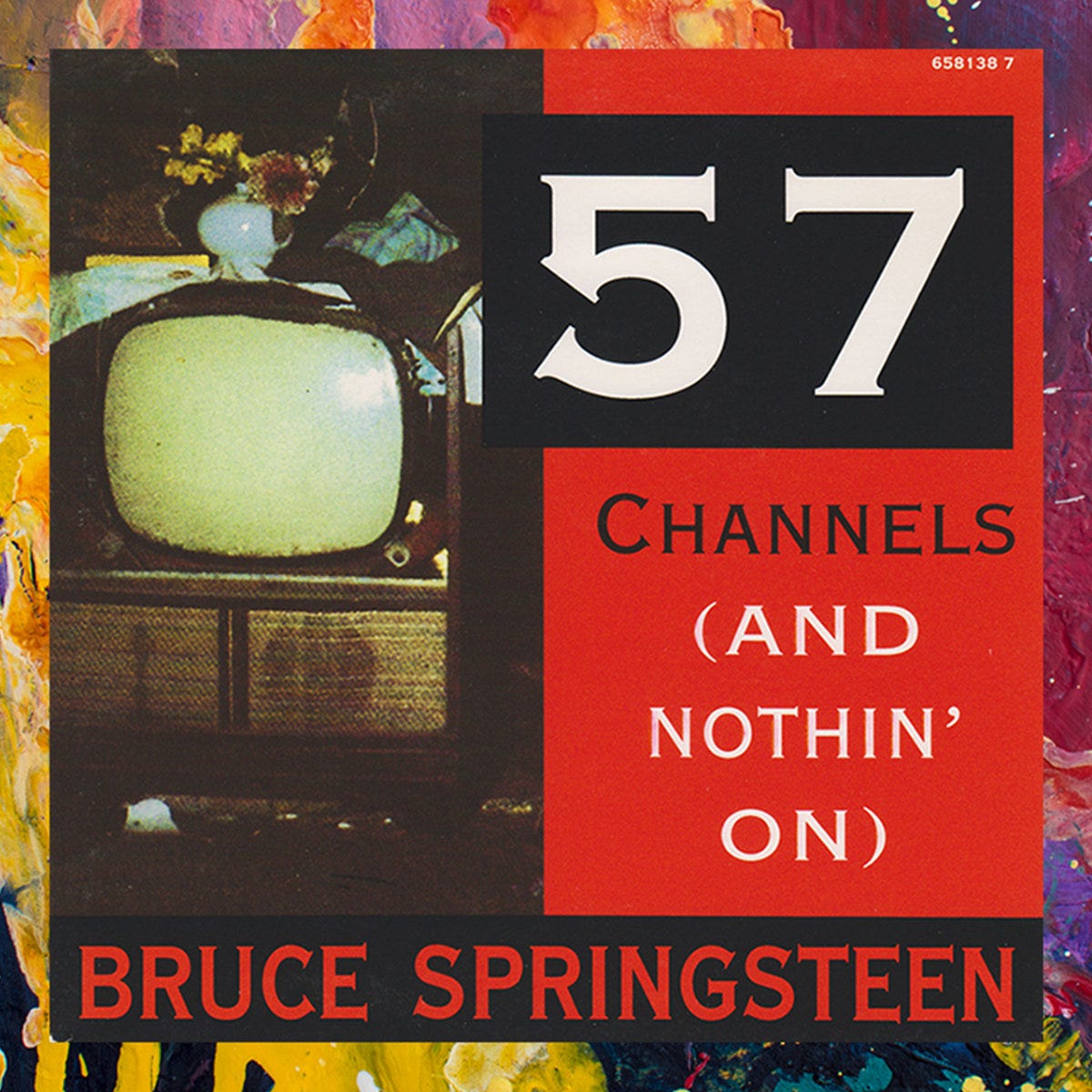
Now, there’s truth to this, but I don’t think it’s the whole story. It is a typical example of the “more-is-better” fallacy that often affect economic analysis. Bigger TV’s and more choices of what to watch are better. What’s lacking here is any standard by which we could measure what we are seeking in these particular goods. No one suggests that we are better off if we just keep expanding the size of our beds (or simply getting more beds to sleep in), because we know what beds are for. Those who sell mattresses have to innovate by making those mattresses better. It seems like the choices he is extolling have to do with two things, information and entertainment. More information is clearly not better, because what we want is accurate information. The proliferation of information has certainly made that harder, even if we can usually call up a YouTube video to solve a household problem (which creates other difficulties, like making more and more of life “self-service,” as this other essay notes). The advantage of the daily newspaper or the network news was that, for all their problems, they did operate according to a level of professionalism that mattered. And what is lost when everyone has their own “custom” information source? A great deal. Because we don’t just want accurate information, we want accurate information that enables us to coordinate with others. One great achievement of the United States has been accurate government statistics that can be used by everyone for reliable decision-making. In this case, more is not better.
And this centrifugal aspect of the information economy may be even more important for the other aspect: entertainment. The existence of the mass media entertainment industry, for all its downsides, tended to offer some degree of unification, which is part of the point of a culture. There were always alternative outlets that people could find, and sometimes those alternative outlets broke into the mainstream - like bands that started on indie labels and then became mainstream successes. Today, there are “influencers,” of course, but it’s still hard to see how contemporary media enables cultural centrifugality. Maybe all this is better for the Church as a culture, although the fragmentation of ecclesial media also seems to me to often cause similar challenges. More information, less ability to dialogue and understand.
The question of the middle-class squeeze in a seeming affluent society is a very important one. Fryer’s article nicely outlines some of the complexities of the challenge, but also forces us to consider questions he does not raise: what is the role of coherent and responsible state regulation? And, as Francis puts it in Laudato Si, what sorts of technological choices should we make if we recognize that “[d]ecisions which may seem purely instrumental are in reality decisions about the kind of society we want to build.” For, as he reminds us, “[w]e fail to see the deepest roots of our present failures, which have to do with the direction, goals, meaning and social implications of technological and economic growth.”