

We've Been Here Before (And We're Always Here...)
Theological Anthropology, Our Technologies, and Disabilities
I devoured Magnifica Humanitas in just a couple of hours the day it was released - and the encyclical did not disappoint. It was not only the discussions of theological anthropology that I enjoyed reading, but also the longer overviews and introductions to Catholic social teaching. I am very much looking forward to using this encyclical in my Catholic Moral Theology course this fall.
But yes - like many people writing on this document, it is the questions of AI and human nature that are occupying much of my current reflections on the encyclical. As much as AI is a different language game (and indeed it is, in the ways it integrates our input into its activities, and reciprocates by directing our subsequent inquiries and considerations) - AI also still exists in the same broad universe of age-old considerations about technologies and humanity.
We have been here before, indeed we are always here in the midst of these questions. Therefore, we need to consider the ways in which our current conversations relate to previous ones about technologies and being human.
We have been here before. The pope begins with scripture, reminds us of the story of which we are a part. He argues that we are making a choice between the Tower of Babel and “the city in which God and humanity dwell together.” (1) The Tower of Babel represents both “an impressive feat: a single language, a single technology, a single direction” but also “a profound danger…conceived without reference to God, supported by a uniformity that eliminated diversity and that chose homogenization over communion” (7). Babel narrates the ways humans aim for “self-affirmation” and “efficiency” rather than human dignity; in doing so, we doom ourselves, for we create a city focused on our idealism about being human - that is, what we think a human being is - rather than fostering a city that supports who we already are as human beings. Which is to say, always already dignified and worthy.
Because we do not believe this, not really, about our dignity and worth…
Babel is not the first time we have to confront our own doubts about our dignity. Turning back earlier in Genesis to the initial creation stories, we find God creating a good world in which humans can live, in both Genesis 1 and 2. God gives us the earth for our good use - and use it, we do.
(As a key side note I won’t develop here, I think Genesis demonstrates that the earth is both our given world and the arena for making use of what we have been given. Put differently it is the scene of our tool-making, of creating things that aid us in making this world our home. The significance of this is that in contemporary debates about viewing technology as primarily as tools, or as a culture/built environment, perhaps Genesis suggests it is both/and.)
Of course Genesis 3 happens, when the serpent makes us doubt our own dignity by raising about God’s commands not to eat from a certain tree. Yet even in the Fall humans are not prevented from stewarding the earth, nor from using the gifts of the earth. Indeed, out of great love, God creates some of the first postlapsarian tools we have, garments of skin.
Many theologians writing about technology-use have written about those garments of skin as our first technologies. Those garments begin to shape a world view in which nakedness becomes known, but also a world in which these second skins protect against sun, rain, ice, snow, and even against each other. Clothing becomes not only a technology that is a gift from God, but can be used in terrible as well as beneficial ways. So Pope Leo can remind us: “technology is never neutral, because it takes on the characteristics of those who devise, finance, regulate and use it.” (9) Clothing can operate in demeaning and divisive ways (we can consider the kinds of clothing concentration camp victims are given) as well as caring ways (how about homemade swaddling PJs for newborns). We have faced these kinds of technology questions even from the beginning.
We are Always Here… We still face these questions today. Even those technologies that we now quite take for granted (doorknobs, pencils, scissors) shape worldviews in which some people are “in” and some people are “out”; some treated with dignity and some not. The doorknob, for example, must be turned in particular ways which are available only to some people, but not to all. Not every hand can open a clock-wise turning knob. Not every hand can reach a doorknob. Not everyone has a hand with which to open a door of this kind. And think of what exists on the other side of that doorknob that may support (or not) human dignity? What if it is a bathroom that cannot be reached in time? Then we can think about a series of doors and doorknobs - and a whole network of rooms in buildings that may be limited to only a few, by design. The apparently insignificant doorknob is the battle site for human dignity especially for those who are left out.
This is why it is crucial to pay attention not to the ones who have, but to the ones who do not have. Can we imagine creating doors that do not so exclude? Of course we can, and we have done so. But doing so requires both a desire to encounter the dignity and worth of another human being, and the creativity to respond in an alternate way.
Pope Leo’s description of humanity in Magnifica Humanitas thus stands critically in contrast to Babel: “building for the common good means accepting the limits and weakness of humanity without considering them an error to be corrected.” (12, emphasis mine). To be human is to be limited. Even before the Fall, we were never created to be God, but in God’s image. Part of the definition of being human is that we are not God; we will not measure up either to our imagined perfections of who God is, nor for our imagined perfections of who we are. But this fact does not make us less human or less worthy; to the contrary, our dignity and worth are integral to our created nature as limited, weak, human beings.
Human Limits and Disabilities
The final point I want to make here is about disabilities in relation to Pope Leo’s theological anthropology (and I really have been here before! See this article from 10+ years ago at the Journal of Moral Theology, “We Do Not Know How to Love.”) Statistics about how many people have disabilities suggest maybe a quarter of the adult population has an identifiable disability related to hearing, neurodiversity, mobility, or vision.
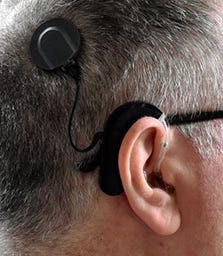
A common narrative about technologies is that they support or enhance life for a range of identified disabilities: motorized wheelchairs, cochlear implants, gene therapies, and more. Isn’t life good when people can move, hear, not have to worry about the lack of particular amino acids? This is the kind of question people often ask - but it is also the type of question that presumes that only an ideal body can be a happy body. In a world where only some bodies get identified as disabled (25%), that means the ideal body looks like most people, maybe even 75% of adults.
Think about how this idea downplays the idea of human dignity - and mostly not for the people society presumes have disabilities. Rather, we downplay human dignity for the people who are presumed to be “ideal”. Who can’t reach the kind of doorknob I mentioned earlier? Well, as it happens, any one of us might be a person who can’t reach a doorknob on any given day. We might be faced with a large door, or be a child, or in a wheelchair, or finding our hands full of some necessary item that we can’t put down.
Presumed “ideal” people are especially the ones who have to imbibe the narrative of having to be efficient, timely, autonomous, and incapable of errors. What a horrible thing, to always be living in a world where there aren’t second chances, and where we think reform or change doesn’t really happen - precisely because we live in a world where our technologies serve efficiencies and imagined ideals.
Pope Leo instead encourages us to rethink how we see ourselves. We are all limited; the things commonly understood as disabilities are just one form of limitation.
What does it look like when we accept, even love, each other and ourselves because of our limits, our mistakes, our weaknesses - and we design our technologies with loving our limits in mind, just as with the doorknobs? This is why I think Pope Leo thus asks us to consider what it means to be “freeing technology from monopolistic control and opening it to discussion and debate, therefore making it human-friendly and restoring it to the plurality of human cultures and ways of life.” (110)
What might it look like to design AI so that those of us in limited bodies get to shape technologies in a way that supports our common good? That is a tough question - but it is also a question we have always already been addressing.