

Some Thoughts while Anticipating an Encyclical
"Artificial Intelligence": Names Tells Us What Things Are
What’s in a name? A lot, actually. Ordinary language carries our moral notions. Debate about “correct” language can sometimes seem excessive, but in fact, our moral notions are carried by linguistic concepts with enough stability to “stick.” I wrote my book on the vice of luxury in part out of a sense that we now lacked the word to describe the character of consumption excess, a place in our language that “luxury” used to have. “Consumerism” as a social term just didn’t get at the heart of the problem. Maybe we need such a critique more now than we did ten years ago!
So too, “artificial intelligence” is the language we have, and it is a formulation that has happily stuck. Because, I would suggest, it is a fairly sturdy label for what we have here: an imitation version of a human capacity that can simulate at least the results of human thinking. When we speak about people as “intelligent,” we normally mean that they know a lot of stuff, and that they can sort through the stuff they know with some ability. But our ordinary language suggests there is a lot more to being human - to what we might call “consciousness” or even “thinking” - than merely being “intelligent.” For Catholics, a towering intellect is certainly an admirable human quality, but it is in no way clear that among the saints, intellectual capacity is the prime consideration - not even for those designated “doctors of the church.” While it’s a mistake to reduce Christianity to a set of rituals or a set of feelings, neither is Christianity simply a philosophy. It is, of course, first and foremost a person, incarnated in a history of human events in which we participate. “Intelligence” may help us grasp some things about that. But the faith is not about passing that kind of test!
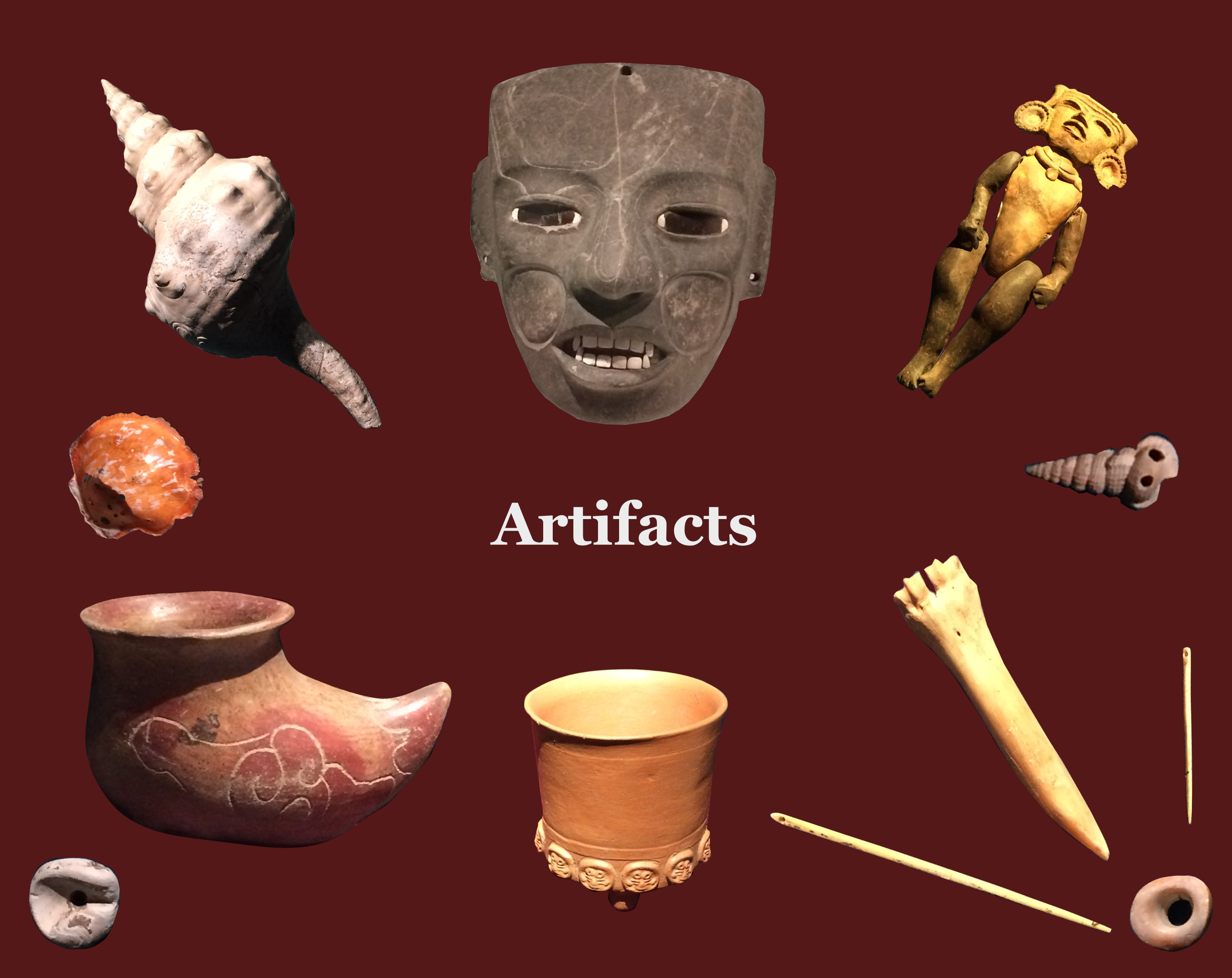
Image from Plaza of the Columns Complex; https://ppcteotihuacan.org/en/field-work/archaeological-materials/
Even better, this new “intelligence” is “artificial.” Of course, the word comes from the idea of an “artifact,” that is something produced by humans, and its opposite is the wonderful word “natural.” Something that is artificial is, by definition, not natural. And in the Christian view, what is natural is what is created. As Popes Benedict and Francis both explained at length, the natural world (of which we are a part) is “prior to us” (BXVI) and “we are not God” (Francis). That world has a dazzling array of diverse interconnectedness that is potentially a blessing in which we can (with our intellect) participate and even enhance. But only if we recognize that natural order. Otherwise, we act out of what Francis famously called “the technocratic paradigm,” which:
exalts the concept of a subject who, using logical and rational procedures, progressively approaches and gains control over an external object. … It is as if the subject were to find itself in the presence of something formless, completely open to manipulation. Men and women have constantly intervened in nature, but for a long time this meant being in tune with and respecting the possibilities offered by the things themselves. It was a matter of receiving what nature itself allowed, as if from its own hand. Now, by contrast, we are the ones to lay our hands on things, attempting to extract everything possible from them while frequently ignoring or forgetting the reality in front of us. Human beings and material objects no longer extend a friendly hand to one another; the relationship has become confrontational.
When we say AI is “artificial,” then, what we should recognize is that it is not only a simulation of the real thing. It is also something that wholly depends on the real thing - which is, of course, a key danger, since a goal of the technocratic paradigm is to develop technologies that replace our natural capacities, and sell them back to us as an improvement. To do so, they must extract from humans the very “intelligence” that they desire to sell back to us as a simulated but improved version.
In the movie The Founder, about the founding and growth of McDonald’s, Michael Keaton’s Ray Kroc enthuses about a milk shake that is just a mixture of powder and water. He is excited that this will remove the need for all the refrigeration of milk and ice cream at stores (i.e. the expense), and the various chemicals in the powder allow for an excellent and standardized simulation of the milk shake experience. One of the original MacDonalds hears about this on the phone, and says, “What? A milk shake without milk?” and hangs up on him.
AI is a lot better than a simulated milkshake, but look, I loved those milkshakes when I was a kid. It’s important that at some point, I realized what real food was. It doesn’t mean I can’t ever have a milkshake. But at the end of the day, artificial intelligence is just that: a simulation of an amazing, fundamentally human quality -one that is natural because it is from God. To use Joshua Mitchell’s great formulation of our large-scale cultural problem with what he calls “substitutism”: AI can be useful as a supplement to our lives, in many ways. But let’s not build an information ecosystem where it is a substitute for the real thing.