

Fifth Sunday of Easter
The Missing Map to the Mansion
Find the Sunday readings here.
My students learn pretty quickly in my classes that moral theology is a lot more complicated, involved, and profound than they expected it to be when they walked in the door on the first day. I give a little pre-quiz in many of my classes, and one of the questions asks what they expect to learn in class. “Right and wrong,” many of them will say. “What is forbidden for us to do.”
They want clear answers to specific questions - and let me also be clear: by the time they leave my bioethics class (for example) they should have a basic understanding of the Church’s teachings about life and death issues, the principle of double effect, and the kinds of yeses and nos they probably expected in that first week.
But I also hope they have a much broader understanding and engagement of moral theology than that - and this week’s Gospel offers one of the reasons why.
The Gospel events this week take place during John’s account of the Last Supper. In the previous chapter 13, Jesus has washed the disciples’ feet and begun to talk with his disciples. Part of what marks out his messages to them is that he keeps talking with his disciples about two main things: 1) where he is going; and 2) what the disciples need to do. In chapter 13, actually, he tells the disciples they can’t come with him yet.
But in chapter 14, Jesus begins to tell us a little about where he’s going - and also begins to give hints about how we can follow him.
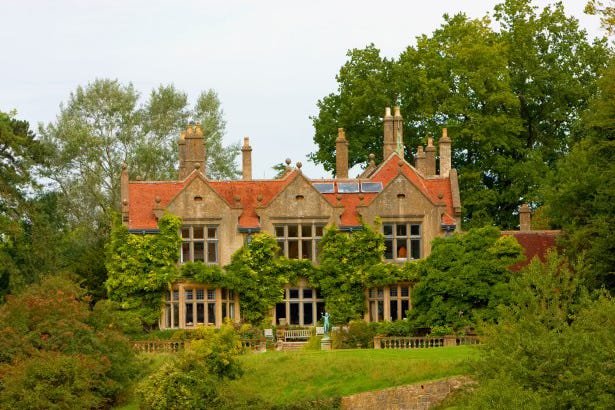
The central image he offers is the house with many dwelling places, where he will prepare a place for us. Not only that, but Jesus take us back to himself so that in this dwelling place we are in the same place where Jesus is.
I love Thomas’s honest question in this week’s Gospel reading: “Master, we don’t know where you are going; how can we know the way?” His question here is reminiscent of the statement he makes after the resurrection in chapter 20, when he insists that he must put his hands in the marks, and put his finger in Jesus’ side, before he’ll believe Jesus is risen.
Thomas wants what so many of us want, including my students at the beginning of my classes. We want the map to the mansion, the definite details about whether, in fact, it is Jesus who has risen from the dead. He and my students share that in common, that desire to know, and to be sure. How can we get to the mansion if we don’t know the way?
But Jesus resists getting into specific details about where, what, and when, preferring instead to focus on Who. “I am the Way, the Truth, and the Life.” “I am the True Vine.” “I am the Good Shepherd.”
He asks us to know him deeply. When we can do that, then he asks us to live our lives in such a way that we truly do remain in him; love each other as he loves us; lay down our lives for our friends.
First, we need that relationship. Then we discover that loving each other as he loves us is difficult to do. We often miss the mark. And trying to live that way means that in fact, we don’t always know exactly where we are going. Moral theology in some way involves reflection and discovery about who Jesus is, and who we are in response.
But what we also discover is that because we are seeking to remain in Jesus, he is keeping us. As this Sunday’s Gospel says: “I will come back again and take you to myself, so that where I am you also may be.”
In Jesus, we are already walking (without quite knowing exactly all the next steps, but knowing who we follow) on the way home to that dwelling place Jesus has prepared. We seek to act in love - we fail - we seek to act in love again.
We grope about by touch, not by sight, and so by a miserable experience exhaust the possible modes of acting till naught is left, but truth, remaining. Such is the process by which we succeed; we walk to heaven backward…